
An invitation to forgive. To reconnect. To let go of what has weighed the heart down and step into something lighter. When those words are spoken, they carry more than celebration—they carry hope. Hope that misunderstandings can fade. That distance can shrink. That joy can return, bright and unapologetic.
There are days that pass quietly—and then there is Holi, a day that refuses to be silent. It does not arrive softly. It comes with laughter, music, and colors rising into the sky.
Across South Asia, as winter loosens its grip and spring begins to bloom, streets that once felt ordinary awaken in vibrant shades. Friends run toward one another with bright gulal in their hands. Children laugh without hesitation. Even strangers exchange smiles. For a few radiant hours, the world feels lighter and joy spreads from one heart to another.
Holi is celebrated from the vibrant cities of India to Hindu minority communities in Pakistan, Nepal, and beyond. While it marks the arrival of spring, its meaning reaches far beyond the season.
Its origins lie in an ancient story passed down through generations—the story of Prahlad and Holika.
Prahlad, a young devotee of Lord Vishnu, refused to abandon his faith despite pressure and punishment from his father, King Hiranyakashipu, who demanded to be worshipped as a god.
Enraged by his son’s devotion, the king sought to destroy him. Holika, the king’s sister, believed she was protected from fire and sat with Prahlad in blazing flames, intending to harm him.
But the fire that was meant to destroy faith ended up protecting it. Prahlad survived. Holika did not.
And from that moment, the message became timeless: arrogance burns, but truth endures.
On the night before Holi, this story comes alive through Holika Dahan. Bonfires are lit in open spaces, and families gather around the flames under the evening sky. Some offer prayers. Some sit quietly in reflection.
The fire is not just symbolic—it feels personal. It represents anger that needs releasing, grudges that need softening, fears that need courage.
As the flames rise, they carry away negativity and make space for light. When the next morning arrives with colors and celebration, it feels earned—as if hope itself has been ignited.
Holi reminds every heart watching those flames: no matter how strong darkness seems, goodness has a way of surviving. After every trial, there is renewal. After every winter, there is bloom.
And then morning comes.
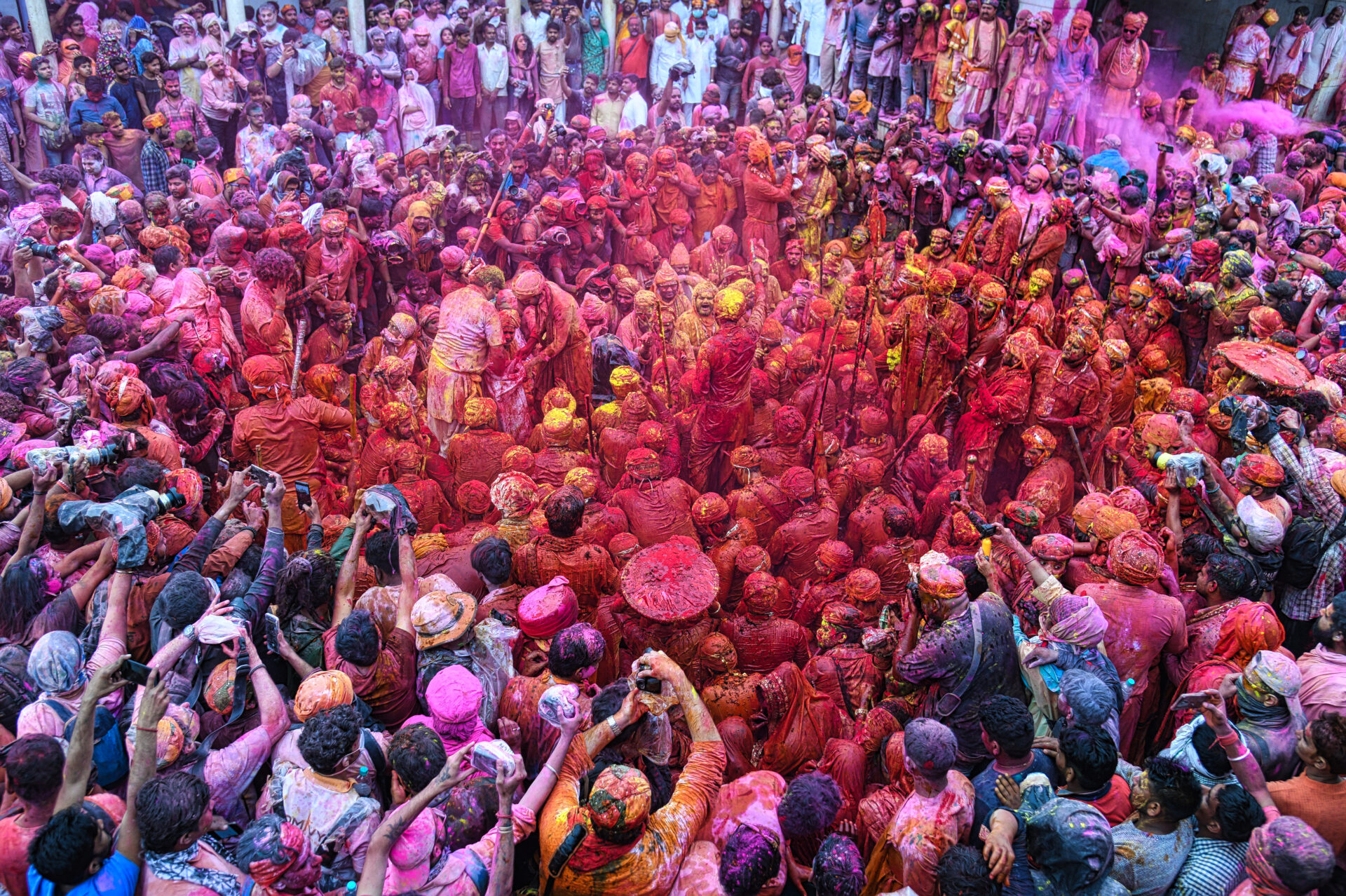
Bright gulal rises into the air—reds, yellows, greens, blues—settling on faces, clothes, and streets alike. Strangers greet each other warmly. Friends turn into playful rivals. Elders bless the young.
For a few beautiful hours, barriers soften. Religion, class, and status fade beneath layers of color, and what remains is something simple and powerful: shared humanity.
For some communities, that celebration carries even deeper meaning. In Pakistan, especially within Hindu communities in Sindh and other regions, Holi is not only about festivity—it is about identity, resilience, and belonging.
As a minority, celebrating openly becomes an expression of presence and pride. The colors speak quietly but clearly of coexistence and hope. When neighbors join in goodwill, the message becomes undeniable: joy does not divide—it connects.
Beyond borders, Holi continues to travel. From London to New York, from university campuses to public parks, people of every background gather to celebrate what the world now calls the Festival of Colors.
Traditions may adapt. Music may change. Languages may differ. But the spirit remains unchanged—unity in diversity, laughter without borders, happiness shared freely.
Perhaps that is why Holi feels so powerful in our time.
“In a world often marked by division, Holi offers a radiant reminder: when colors mix, they do not lose themselves; they create something brighter together. Peace does not always whisper—sometimes it bursts into the sky in pink and gold.”
And when the colors finally fade, what stays behind is not the pigment on our skin, but the warmth in our hearts.
Holi is not merely a celebration of spring; it is a celebration of humanity—radiant, resilient, and always ready to begin again.